Monday, July 2, 2018

CAMBRIC! July 2, 1768 at the Colden Store, Coldengham, New York

Saturday, July 2, 1768
Coldengham, New York
Store of Cadwallader Colden, Jr.

Cambric

George Field purchased one-half yard of Cambric (Cambrick) for four and one-half pounds at the Colden Store on this day 250 years-ago.

Cambric reproduction. 2.8 oz linen at 55 threads/inch. Image courtesy of WmBoothDraper.com


Cambric was a very fine linen used for neck and pocket handkerchiefs, caps, and ruffles.

==============================

Search the DayBook

This article is one in a series of a daily accountings of Colden Store transactions. Be sure you read the first installment for an introduction to the store. You should also read this article which appeared in the Journal of the Orange County Historical Society.

===============================

George Field was mentioned six times in the DayBook, all were in 1768. On two of those occasions, as was the case today, he was represented by his wife.

In addition to the Cambric, Field's wife purchased Lawn (1/4 yd), Checked Linen (1.5 yds), Linen (2.5 yds), three skeins of Silk, one paper of Pins, and a Handkerchief.

Cambric was a very popular fabric at the Colden Store, unlike the Ramsay store in Alexandria where only three purchases of Cambric were recorded. Perhaps this type of linen was known by a different name in the south, as it seems unlikely that the fashion would be so much different in these two colonies.

Over 125 purchases of Cambric were recorded in the Colden DayBook. The purchases were in small quantities (1/8 to 1/2 yard) perhaps because it was an expensive and impractical fabric. It was priced at 9 to 14 shillings per yard. At the higher price, a yard of fabric was the equivalent of three-day's wages.

===============================

Search the DayBook

Sunday, July 1, 2018

BLAKE! July 1, 1768 at the Colden Store, Coldengham, New York

Friday, July 1, 1768
Coldengham, New York
Store of Cadwallader Colden, Jr.

John and Mary Blake

John Blake purchased one pound of nails at the Colden Store on this date, 250 years-ago. Perhaps he made improvements his home that still stands on Route 208 just south of 17K in the Town of Montgomery.

John Blake home on Route 208 in Montgomery, New York in 2010. The home has been altered into a professional office, but still can be recognized.

==============================

Search the DayBook

This article is one in a series of a daily accountings of Colden Store transactions. Be sure you read the first installment for an introduction to the store. You should also read this article which appeared in the Journal of the Orange County Historical Society.

===============================

John Blake appeared eighteen times in the DayBook. On one occasion his 'son Jno' appeared at the store in his stead. (see below)

Ruttenber's History of Orange County [p. 374] states that John Blake was one of the early settlers of the area south and west of Goodwill Church sometimes known as Neelytown, perhaps as early as  the 1730s.

Ruttenber goes on to say that [p. 379] "John Blake purchased (May 1, 1761) 477 acres of the Patrick McKnight Patent. He was of English descent, the genealogy of the family being traced back to Robert de Blakeland of Wiltshire, 1286. [His wife] Mary Morris of Coldenham, however, was from Ireland. [Their son, John Jr.] ...received only such elementary instruction as the common schools of the country offered..." yet he went on to be a revered politician both at the state and federal levels. John Jr. married Elsie Eager (dau. of William Eager) of Neelytown.

In the 1779 tax assessment for Hanover Precinct (conducted eleven years from today's date), John Blake was living at the location where his home stands today on Route 208 south of the Goodwill Church. He was just up the road from Dr. Charles Clinton and Colonel Malcom (believed to be living in the house later owned by Colonel John Nicholson which still stands). He had 222 acres of land and £156 of personal property, making him one of the more successful farmers in the area.

In 1798, his home appeared on Galatian's map of Montgomery in the same location.

Galatian 1798 map showing the home of John Blake in red circle, just south of Goodwill Church.


John's example of serving the community was a model for his son, John Jr. The senior Blake was a vestryman at the St. Andrews Church in 1775 [p. 392] and was appointed Sheriff in Orange County 1802 [p. 206]. [All references are to Ruttenber]

John Blake Jr. was a member of the New York Assembly from Orange County in 1798-1800, 1811, 1819 [p. 204], Sheriff of Orange County in 1803 [p.206], Representative to Congress from 1805-1809 [p. 205], Judge of Common Pleas in 1815 [p. 203], a Presidential Elector for the Town of Montgomery in 1816 [ p. 202], and served as Supervisor of the Town of Montgomery for an unprecedented fifteen consecutive years from 1810-1825 [p. 383].

John Jr. was born in late 1762 per the information on his headstone, which would have made him only five years of age on October 4, 1768 when he picked up 4 # of sugar and an Iron Bound Hogshead (barrel) at the Colden Store.

Despite John Sr.'s earlier affiliation with St. Andrews Episcopal Church, he (1818) and Mary (1815) were buried at Goodwill Presbyterian Church.

===============================

Search the DayBook

Saturday, June 30, 2018

SCYTHES & RANELAGH! June 30, 1768 at the Colden Store, Coldengham, New York

Thursday, June 30, 1768
Coldengham, New York
Store of Cadwallader Colden, Jr.

Scythe Reprise & Fireworks in Ranelagh Gardens

There were no DayBook entries for Wednesday, June 29, 1768. Perhaps Colden had a court date in Kingston or needed to make a purchasing trip to New York City. Or perhaps it was a 'Day of Prayer' or some other community festivity? For example, the prior Friday, June 24, was the anniversary of John the Baptist. Free Masons in New York City met at their Hall in Scotch Street at 10 am and then dined at Ranelagh Gardens at 2 pm. [New-York Journal for June 23, 1768 p. 3] The area around the Colden Store must have had some sort of leisure entertainment such as horse racing, dances, or music. But none of that is revealed in the DayBook or in other local histories of this area. Apparently one needed to visit New York City to partake in theater, concerts, and fireworks. Such an opportunity was available on this day, 250 years ago. The New-York Journal of this date confirmed that the Monday/Thursday concert and fireworks at Ranelagh Gardens would continue on this evening and made a curious comment that the interruption of Monday's concert was an unavoidable accident and assured the public that at future performances "no part of the Concert will be omitted and that everything will be conducted with the utmost Regularity and Decorum."

Ranelagh (Ranelah) Gardens on 1776 British Map of Manhattan. Red notations show Hudson River on the west, current location of City Hall, and approximate location of the Gardens on a modern street grid.  Image courtesy of New York Public Library Digital Collection.


=======================================

I first wrote about scythe purchases in March when about 60% of the DayBook had been transcribed. At that point, thirteen sales of scythes had been transcribed from the DayBook. As you might imagine, scythes were a seasonal item. Most were sold at harvesting times (June through September). Now that the transcription has reached June and July of 1768, thirty-two scythe transactions have been transcribed. All but four of them were in June or July.

In fact, on this day, 250 years-ago, the store sold five scythes.

Scythe blade found at the Jenks mill site, Saugus Iron Works National Historic Site, Saugus, Massachusetts. The hook on the right attached to the wooden handle of the scythe. The visible thick backbone of iron gave strength to the blade. The missing thin blade has rusted away. Image courtesy of Saugus Iron Works.


==============================

Search the DayBook

This article is one in a series of a daily accountings of Colden Store transactions. Be sure you read the first installment for an introduction to the store. You should also read this article which appeared in the Journal of the Orange County Historical Society.

===============================

The first successful integrated Iron Works in America was founded in 1646 in what is now Saugus, Massachusetts. It has been rebuilt and is now a National Park. It is well worth the visit.  Even though the Works predates the Colden Store by over a century, it is proof that the colonies had long been attempting to make finished iron goods in America.

In about the same year, 1646, Joseph Jenks sought to build his own rolling mill at the tailrace of the Saugus Iron Works furnace. He specifically mentioned his intention to make scythes and other 'edge tools' using novel 'engines'. He petitioned the Massachusetts General Court for patent protection. In fact, this was one of the first recorded patents in America.

On July 7, 1768, George Field purchased a "New England Scythe" at the Colden Store. This was more than 100 years after the patent by Jenks. Could it have been of the Jenks design?

All of the other DayBook entries for 'scythe' do not specify 'New England.' Does this mean that the rest were imported from England? The answers are not revealed by the DayBook.

===============================

Search the DayBook

Thursday, June 28, 2018

JAMES CAMPBELL! June 28, 1768 at the Colden Store, Coldengham, New York

Tuesday, June 28, 1768
Coldengham, New York
Store of Cadwallader Colden, Jr.

James Campbell

James Campbell (Cammell, Campble, Camble, Cambel) purchased one-half gallon of New York City Rum at the Colden Store on this day, 250 years-ago. The purchase was charged to account # 193. On prior occasions, the owner of account # 193 was described as James Campbell, a shoemaker from Little Britain.

Little Britain was the settlement of the Clinton party who emigrated in 1729. (see blogs on the Clintons, Riggs , McClaughreys). However, no 'Campbell' was a passenger on the ship, George & Anne with the rest of the Clinton party. Perhaps James had emigrated later (as had Riggs) or perhaps he had just settled in Little Britain as this more affluent community had more of a need for a shoemaker.

We know that there were Campbells unrelated to Joel (eponym of this blog) living in this area at the same time. For example, Alexander Campbell came with the Lachlan Campbell group about 1739. (See Neal Gillespie's statement to that effect in his will.)   Because James does not appear on the 1779 tax assessment, it might be presumed he was a loyalist (as was Alexander) and left the area for more hospitable surroundings.

==============================

Search the DayBook

This article is one in a series of a daily accountings of Colden Store transactions. Be sure you read the first installment for an introduction to the store. You should also read this article which appeared in the Journal of the Orange County Historical Society.

===============================

The other James Campbell mentioned in the DayBook was a millwright. His purchases were assigned to account # 239.  He appears only twice in the DayBook in late 1768. Perhaps he was a recent addition to the community or was brought in temporarily to help one of the larger landowners with a mill. These hints seem to indicate that this James Campbell was also unrelated to Joel Campbell (eponym of this blog.)

As mentioned above, both of these 'James Campbells' were not enumerated in the 1779 tax assessment for Hanover. Perhaps they were enumerated in New Windsor (Little Britain was in New Windsor Precinct) for which the 1779 tax assessment has not survived.

A few months from this date, on August 2, 1768, the wife of James Campbell was ailing (whether the wife of the millwright or the shoemaker is unknown). Her treatment was chronicled by Dr. Charles Clinton in his DayBook. 

===============================

Search the DayBook

Wednesday, June 27, 2018

LAWN! June 27, 1768 at the Colden Store, Coldengham, New York

Monday, June 27, 1768
Coldengham, New York
Store of Cadwallader Colden, Jr.

Lawn

Samuel DeGrote Jr. purchased one-quarter yard of the expensive Lawn fabric (12 shillings per yard)  at the Colden Store on this day, 250 years-ago. He also bought pins, tape, and thread, tea, rum, salt, and a scythe. In addition, he picked up snuff and pipes for James Daily. DeGrote was one of fifteen persons in the store on this day. The store sold 35 items.

Collar made of Whitework Lawn and Bobbin Lace ca. 1830-1869. Image courtesy of Victoria and Albert Museum.

==============================

Search the DayBook

This article is one in a series of a daily accountings of Colden Store transactions. Be sure you read the first installment for an introduction to the store. You should also read this article which appeared in the Journal of the Orange County Historical Society.

===============================

I described 'Lawn' back in a February 22, 2018 blog, but now that more of the DayBook has been transcribed, it is time for an update.

Lawn is defined in Webster's 1828 dictionary as "A sort of fine linen. Its use in the sleeves of bishops, explains the following line. -A saint in crape is twice a saint in lawn-."  Lawn at the Colden store was twelve times the price of "Osenbrigs" [Osnaburg]. Caulfeild's 1882 Dictionary of Needlework describes Lawn as "a delicate linen .. used for making of shirts, handkerchiefs, ruffles, and ruffs....resembles cambric, but thinner and finer." p321

Colden sold Lawn on at least 50 occasions and typically in very small yardages.  His customers made 9 puchases of 1/8 yard, 28 purchases of 1/4 yard, 3 of 1/2 yard, and only 10 for more than 1/2 yard.  Does this mean that most of the use was in making handkerchiefs?

Entries for 'Lawn' in the Colden DayBook never contained additional descriptors.  However, in the Ramsay Ledgers (a Virginia Store in the prior decade), 'Lawn' was described as 'plain, flowered, striped, and numbered.' The Lawn at the Ramsay store had a wider variation in price (2 to 8 shillings per yard), indicating variations in quality (thread count?). Colden's price for Lawn varied from 9 to 16 shillings per yard.

===============================

Search the DayBook

Monday, June 25, 2018

TEAPOT! June 25, 1768 at the Colden Store, Coldengham, New York

Saturday, June 25, 1768
Coldengham, New York
Store of Cadwallader Colden, Jr.

Teapot

Samuel Sprague's daughter brought 36 yards of her weaving to the store and sold it to Colden for £1:7:0 on this day, 250 years-ago. She also sold him two and one-half pounds of old pewter and purchased tea, indigo, and a black ceramic teapot. The total transaction resulted in a credit to her father's account of £1:4:0.

Ceramic Teapot - England 1766-1770. Image Courtesy of National Museum of American History


==============================

Search the DayBook

This article is one in a series of a daily accountings of Colden Store transactions. Be sure you read the first installment for an introduction to the store. You should also read this article which appeared in the Journal of the Orange County Historical Society.

===============================

Colden sold at least 28 teapots over the sixteen months covered by the DayBook. One was described as 'Earling' (Earthen or ceramic) and sold for one and one-half shillings. About half of the sales were around this price, so it is estimated that half of the teapots were ceramic. One of these was described as 'Blk' [Black?] and was the one sold to Samuel Sprague's daughter on this day.

One interesting teapot of this period is shown in the image above. Even though the Stamp Act had been repealed over a year ago, it still animated much of the population. The sometimes violent protests against the act and against Cadwallader Colden's father (acting governor at the time) had certainly left a bad-taste in the mouth of the store's owner.  He would have been unlikely to stock such a teapot to sell in his store.

Three teapots sold by Colden were described as 'puter' [pewter] and sold for about seven shillings, or more than four times the cost of the ceramic teapots. Twelve teapots fell into this category.

American silversmiths, such as Paul Revere, were already making pewter teapots by this time, but it is likely that Colden's teapots were all imported. The teapot below is believed to have been one of 144 imported in 1765 to Boston from the London firm of Robert & Thomas Porteus. Perhaps it is similar to the ones sold at the Colden store.

A Scarce Footed Antique English Export Pewter Teapot by Robert & Thomas Porteus Image Courtesy of hillpewter.com 

===============================

Search the DayBook

Sunday, June 24, 2018

CINNAMON! June 24, 1768 at the Colden Store, Coldengham, New York

Friday, June 24, 1768
Coldengham, New York
Store of Cadwallader Colden, Jr.

Cinnamon

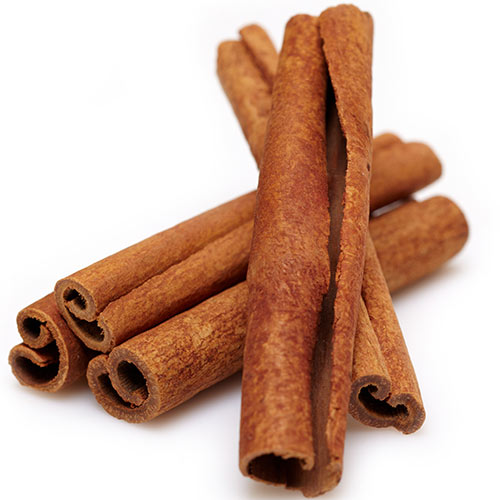
Thomas Beattie (Beatty) purchased one-half ounce of cinnamon at the Colden Store on this day, 250 years-ago. The cinnamon was likely in its raw form -- the dried golden inner bark of the cinnamon tree in 'curled quills.'

Cinnamon 'quills'.


==============================

Search the DayBook

This article is one in a series of a daily accountings of Colden Store transactions. Be sure you read the first installment for an introduction to the store. You should also read this article which appeared in the Journal of the Orange County Historical Society.

===============================

Cinnamon was a luxury item at the Colden Store.  He sold it only on five occasions - the total amount being less than three ounces. An ounce of cinnamon fetched three shillings and nine pence...almost a day's wages.

Cinnamon sales in the Colden Store Day Book.

Most of the cinnamon at this time was grown in Ceylon (Sri Lanka) and transported in bags or bales weighing about 100 pounds. [Isaac Smith Homans, A Cyclopedia of Commerce and Commercial Navigation, Volume 1, p.307]

===============================

Search the DayBook